Call us:



Many Bangladeshi students dream of studying in Canada,
Australia, the UK, the USA, Denmark, Finland, Germany, or other developed
countries. For them, IELTS is not only an English test. It is often the bridge
between a dream and a real admission offer. This is why the question How to get7+ band score in IELTS is so important. A 7+ band score can open doors to
better universities, scholarships, visa confidence, and stronger academic
opportunities. It can also help a student feel ready for life in an English-speaking
classroom.
But the journey is not always simple. Many students in
Bangladesh study in Bangla medium or English version schools. They may
understand grammar, but they often feel shy while speaking. Some students can
read well, but they struggle with time management. Others can speak naturally,
but they write essays without clear structure. So, How to get 7+ band score in
IELTS is not only about memorizing vocabulary. It is about building four skills
step by step.
Think about a student named Rahim from Mirpur. He had good marks in HSC, but his first mock test score was only 5.5. He was disappointed. Later, he made a routine, corrected his writing errors, practiced speaking daily, and took expert feedback from IELTS Professor. After three months, he achieved 7.0 overall. His story shows that a 7+ score is not magic. It is a result of smart practice, honest feedback, and steady confidence.
Why a 7+ IELTS Band Score Matters
A 7+ IELTS band score usually shows that you are a good user
of English. You may still make small mistakes, but you can communicate well in
academic and real-life situations. For study abroad, this score is powerful
because many universities ask for 6.0 to 7.0 depending on the program, country,
and level of study.
For example, a student applying for nursing, teaching, law,
or health science may need a higher band score than a student applying for
business or engineering. Some universities also ask for no band less than 6.0
or 6.5. So, even if your overall score is 7.0, you must also protect each
module score.
This is where many Bangladeshi students make a mistake. They
only chase the overall score. They forget that one weak module can damage the
final result. A student may get Listening 8, Reading 7, Speaking 7, but Writing
5.5. This can create problems for admission or visa requirements.
So, How to get 7+ band score in IELTS means learning
balance. You must improve all four areas: Listening, Reading, Writing, and
Speaking. A strong IELTS plan is not only about hard work. It is about working
in the right direction.
Understand the IELTS Scoring System First
Before preparing, you must understand how IELTS is scored.
IELTS gives a band score from 0 to 9. You receive separate scores for
Listening, Reading, Writing, and Speaking. Then the overall score is calculated
from the average of these four skills.
Listening and Reading have 40 questions each. To reach Band
7 in Listening, you usually need around 30 correct answers out of 40. In
Academic Reading, Band 7 also usually needs around 30 correct answers, though
this can vary slightly by test difficulty.
Writing and Speaking are different. They are judged by
examiners. Writing is marked through task achievement, coherence and cohesion,
vocabulary, and grammar. Speaking is marked through fluency, vocabulary,
grammar, and pronunciation.
This means you cannot improve Writing and Speaking only by
watching videos. You need correction. You need someone to show you what is
wrong. Many students write essays for months but repeat the same mistakes. This
is why feedback from a mentor, teacher, or a trusted platform like IELTS
Professor can save time.
Build a Realistic Study Plan
The first real answer to How to get 7+ band score in IELTS
is planning. Without a plan, many students study randomly. One day they watch a
YouTube video. Another day they solve one Reading test. Then they stop for
three days. This style does not produce a 7+ score.
A better plan should include daily practice and weekly
review. You can follow this simple routine:
- Listening
practice for 30 minutes
- Reading
practice for 40 minutes
- Writing
practice for 45 minutes
- Speaking
practice for 20 minutes
- Vocabulary
and grammar review for 20 minutes
You do not need to study 8 hours a day. Many Bangladeshi
students have university classes, jobs, tuition, or family duties. So, even 2
to 3 focused hours per day can work if you are consistent.
Let us take the example of Nusrat from Chattogram. She was a
final-year student and could not study the whole day. She studied two hours at
night after dinner. She used Friday for full mock tests. At first, her Reading
score was 6.0. After six weeks of timed practice, it became 7.5. Her
improvement came from discipline, not from studying all day.
Master IELTS Listening with Active Practice
Listening is often the easiest module to improve if you
practice correctly. Many Bangladeshi students watch English movies or listen to
songs, but they do not improve much. Why? Because passive listening is not
enough.
Active listening means you listen with a task. You try to
understand names, numbers, locations, opinions, changes in tone, and
distractors. IELTS Listening often gives one answer first, then changes it. For
example, the speaker may say, “I wanted Monday, but actually Tuesday is
better.” The answer is Tuesday, not Monday.
To improve Listening:
- Read the questions before the audio starts.
- Underline key words.
- Predict the type of answer.
- Listen for meaning, not only exact words.
- Check spelling carefully.
- Practice with different accents.
Bangladeshi students often struggle with British,
Australian, or Canadian accents. This is normal. The solution is regular
exposure. Listen to BBC Learning English, TED Talks, university lectures, and
IELTS practice tests. Do not panic if you miss one answer. Stay focused on the
next question.
Improve IELTS Reading with Strategy, Not Fear
Many students think Reading is about knowing every word.
This is not true. Reading is about finding answers under time pressure. You do
not need to understand every sentence. You need to understand the question,
locate the information, and choose the correct answer.
For Academic IELTS Reading, time management is very
important. You have 60 minutes for three passages. Many students spend 25
minutes on Passage 1 and then suffer in Passage 3. A better approach is:
- Passage 1: around 15 minutes
- Passage 2: around 20 minutes
- Passage 3: around 25 minutes
Common question types include True False Not Given, matching
headings, sentence completion, multiple choice, and matching information. Each
type needs a different method.
For True False Not Given, remember this simple rule. True
means the statement agrees with the text. False means the text says the
opposite. Not Given means the information is missing or not clear. Many
Bangladeshi students choose False when the answer is actually Not Given. This
happens because they use personal logic instead of text evidence.
Read English newspapers, academic blogs, and simple research
articles. But also practice real IELTS-style reading tests. General reading is
helpful, but exam reading is different.
IELTS Writing: The Biggest Challenge for Bangladeshi
Students
Writing is the most feared module for many learners. The
reason is simple. In Bangladesh, many students learn English through memorized
paragraphs, essays, and grammar rules. IELTS Writing does not reward memorized
answers. It rewards clear thinking, organized ideas, accurate grammar, and
natural vocabulary.
- For Task 1, Academic students may need to describe a graph,
chart, table, map, or process. You must report key features. You should not
explain your personal opinion. You should compare data clearly.
- For Task 2, you need to write an essay. Your essay must
answer the question directly. It should have a clear introduction, body
paragraphs, and conclusion. You must give reasons and examples.
A good Task 2 structure can be:
- Introduction with paraphrase and opinion
- Body paragraph 1 with main idea, explanation, and example
- Body paragraph 2 with main idea, explanation, and example
- Conclusion with final summary
Do not use very difficult words just to impress the
examiner. Many students write phrases like “in this modern era of
globalization” again and again. These phrases sound memorized. Simple and
accurate English is better.
This is where IELTS Professor can be useful for learners who
need writing correction, essay structure, mock tests, and personal guidance. A
teacher can show whether your ideas are clear, whether your grammar is
accurate, and whether your essay really answers the question.
IELTS Speaking: Speak Clearly, Not Perfectly
Many Bangladeshi students feel nervous in Speaking because
they fear mistakes. But IELTS Speaking is not a test of perfect English. It is
a test of communication. You need to speak clearly, give full answers, and show
a range of vocabulary and grammar.
The Speaking test has three parts. Part 1 is about familiar
topics like home, study, work, hobbies, and daily life. Part 2 is a cue card
where you speak for about two minutes. Part 3 is a deeper discussion related to
the cue card topic.
To improve Speaking:
- Practice every day for 15 to 20 minutes.
- Record your voice and listen again.
- Answer why and how, not only what.
- Use examples from your own life.
- Do not memorize full answers.
- Learn natural linking words.
For example, if the examiner asks, “Do you like reading?” do
not only say, “Yes, I like reading.” A better answer is, “Yes, I do. I mostly
read short articles online because they help me learn new ideas quickly. When I
was in college, I used to read storybooks, but now I read more academic and
career-related content.”
This answer is simple, but it gives detail. That is what you
need.
Vocabulary: Learn Useful Words, Not Fancy Words
Vocabulary matters in IELTS, but many students misunderstand
it. They think Band 7 means using rare words. In reality, Band 7 vocabulary
means using the right word in the right place.
For example, instead of saying “big problem” again and
again, you can say “serious issue,” “major challenge,” or “important concern.”
But you should not force difficult words that you do not understand.
Make topic-based vocabulary lists. Common IELTS topics
include education, technology, health, environment, work, culture, transport,
media, family, and globalization.
For each topic, learn:
- 5 useful nouns
- 5 useful verbs
- 5 useful adjectives
- 3 examples
- 2 common collocations
For example, for education, you can learn words like
curriculum, assessment, skill development, practical learning, academic
pressure, and career opportunity. Then use them in sentences.
Grammar: Accuracy Comes Before Complexity
Many students ask How to get 7+ band score in IELTS but
ignore grammar. Grammar is important in both Writing and Speaking. You do not
need to use very complex grammar all the time. But you need control.
Focus on these areas:
- Subject-verb agreement
- Article use
- Tense control
- Prepositions
- Sentence variety
- Conditional sentences
- Relative clauses
For example, many Bangladeshi students write, “People is
becoming more dependent on technology.” The correct sentence is, “People are
becoming more dependent on technology.” Small errors like this can reduce your
score if they happen often.
Try to write 10 sentences every day using new grammar. Then
check them. Accuracy grows through correction.
Mock Tests and Feedback: The Real Turning Point
Mock tests are essential. They show your current level. They
also teach you time management. But mock tests without analysis are not enough.
- After every mock test, ask:
- Which question types did I miss?
- Was it a vocabulary problem?
- Was it a time problem?
- Was it a spelling problem?
- Was it a misunderstanding?
- Did I lose focus?
A student named Arif from Sylhet took five mock tests and
got 6.0 every time. He felt stuck. Later, he analyzed his mistakes and found
that he was losing marks in Reading because of matching headings. He practiced
only that question type for one week. His next mock score became 7.0.
This is the real secret. Do not only practice more. Practice
better.
Financial Challenges for Bangladeshi Students
IELTS preparation can be expensive. Test fees, coaching
fees, books, transport, and mock tests can create pressure. Many students from
middle-class families feel guilty asking parents for money again and again.
The good news is that smart preparation does not always need
huge spending. You can use free resources, library materials, online practice
tests, speaking partners, and group study. However, for Writing and Speaking,
paid feedback may be worth it because these modules are hard to judge alone.
If money is limited, spend carefully. Do not buy too many
books. Use one or two good resources. Take mock tests before the real exam. Get
writing checked at least a few times. Choose guidance from places that give
real feedback, not only motivational speeches.
IELTS Professor can be organically considered by students
who want structured support in Dhanmondi or online, especially if they need
personal correction, mock speaking, and a realistic study roadmap.
Cultural and Confidence Issues
- Many Bangladeshi learners know English but do not speak
because they fear judgment. They think people will laugh at their accent or
mistakes. This fear is one of the biggest barriers.
- But IELTS does not require a foreign accent. You can speak
with a Bangladeshi accent if your pronunciation is clear. The examiner wants to
understand you. They do not expect you to sound British or Australian.
- To build confidence, start small. Speak English with one
trusted friend. Describe your day in English. Record one cue card daily. Join a
speaking club if possible. At first, you may feel uncomfortable. After two
weeks, it becomes easier.
Remember, confidence is not something you wait for.
Confidence comes after practice.
A 60-Day Roadmap for a 7+ Score
If your current level is around 6.0, a 60-day plan can help
you move toward 7.0. But if your level is below 5.0, you may need more time.
- Days 1 to 10: Understand the test format and take a
diagnostic mock test.
- Days 11 to 25: Build Listening and Reading strategies.
- Days 26 to 40: Focus deeply on Writing Task 1 and Task 2.
- Days 41 to 50: Practice Speaking with recordings and mock
interviews.
- Days 51 to 60: Take full mock tests, review mistakes, and
polish weak areas.
During the last week, do not try to learn everything. Focus
on sleep, confidence, timing, and error control.
Common Mistakes to Avoid
Students often fail to reach 7+ because they repeat common
mistakes. Avoid these habits:
- Memorizing essays
- Ignoring Writing feedback
- Speaking too fast
- Learning random vocabulary
- Practicing without timing
- Taking the real test too early
- Skipping grammar correction
- Using too many templates
- Not reviewing mistakes
The IELTS exam rewards real skill. So, be honest with your
level. If your mock score is 5.5, do not register for the exam next week unless
there is an emergency. Give yourself time.
Final Thoughts on How to get 7+ band score in IELTS
The journey to a 7+ band score is not only academic. It is
emotional too. Many students feel fear, pressure, and confusion. Some compare
themselves with friends. Some lose confidence after one bad mock test. But one
bad score does not define your future.
How to get 7+ band score in IELTS depends on clear planning,
daily practice, expert feedback, and mental strength. You need to improve skill
by skill. You need to learn from mistakes. You need to stay patient.
For Bangladeshi students, the dream of study abroad often
carries family hope, financial sacrifice, and personal ambition. So, prepare
with respect for your own journey. Whether you study by yourself, with a
partner, or with support from IELTS Professor, the main goal is the same:
become a better English user and enter your next academic life with confidence.
Summary
How to get 7+ band score in IELTS is a practical question
with a practical answer. You need a clear routine, strong basics, smart
strategies, and regular feedback. Bangladeshi students may face money pressure,
fear of speaking, and weak writing practice, but these challenges can be
solved. With discipline, mock tests, correction, and confidence, a 7+ band
score is possible.
FAQs
1. How long does it take to get a 7+ band score in IELTS?
- It depends on your current level.
- If you are already around Band 6, you may need 6 to 10 weeks
of focused preparation.
- If your level is around Band 5, you may need 3 to 5 months.
- The biggest factor is not only time, but quality of
practice.
- You must study all four modules and review your mistakes.
- For Bangladeshi students, regular writing correction and
speaking practice can make the biggest difference.
2. Is it possible to get 7+ in IELTS without coaching?
- Yes, it is possible if you are disciplined and understand
the test well.
- Many students prepare by themselves using official practice
materials, YouTube lessons, and mock tests.
- However, self-study becomes difficult for Writing and
Speaking because you may not notice your own mistakes.
- If you are stuck at 6 or 6.5, expert feedback can help.
- A mentor can show your weak points faster.
- So, coaching is not always required, but guided correction
is often very useful.
3. Which IELTS module is hardest for Bangladeshi
students?
- Writing is often the hardest module for Bangladeshi
students.
- Many students are used to memorized school essays, but IELTS
needs fresh answers.
- They also face problems with grammar, paragraph structure,
and idea development.
- Speaking can also be difficult because many students feel
shy or nervous.
- Listening and Reading usually improve faster with practice.
- For Writing and Speaking, personal feedback is very
important.
4. How can I improve IELTS Writing from 6 to 7?
- First, learn the marking criteria clearly.
- Then practice Task 1 and Task 2 separately.
- Do not memorize essays because memorized writing sounds
unnatural.
- Focus on answering the question directly with clear
paragraphs.
- Use simple but accurate grammar and topic-based vocabulary.
- Most importantly, get your writing checked by a teacher or a
trusted service like IELTS Professor.
5. How many correct answers are needed for Band 7 in
Listening?
- For IELTS Listening, you usually need around 30 correct
answers out of 40 for Band 7.
- This number may change slightly depending on the test
version.
- So, your safe target should be 32 or more in practice tests.
- You must be careful with spelling, plural forms, and word
limits.
- Do not leave any answer blank because there is no negative
marking.
- Practice with different accents to build real exam
confidence.
6. How can I get Band 7 in IELTS Speaking?
- Speak naturally and clearly.
- Do not memorize full answers because examiners can notice
this.
- Give extended answers with reasons and examples.
- Practice Part 2 cue cards with a timer.
- Record your voice and check fluency, grammar, and
pronunciation.
- You do not need a British accent, but your words must be
easy to understand.
7. What is the best daily routine for IELTS preparation?
- A good daily routine should cover all four skills.
- You can practice Listening for 30 minutes and Reading for 40
minutes.
- Then write one Task 1 or one Task 2 response.
- Practice Speaking for 15 to 20 minutes with a partner or
recorder.
- Review vocabulary and grammar before sleeping.
- Consistency is more important than studying many hours only
once a week.
8. Can I get 7+ IELTS in one month?
- It is possible only if your current level is already close
to 6.5 or 7.
- If your basics are weak, one month may not be enough.
- In one month, you can improve exam strategy and reduce
common mistakes.
- You should take at least three full mock tests before the
real exam.
- Writing and Speaking feedback should be taken as early as
possible.
- Do not book the exam too early if your mock scores are still
low.
9. How can Bangladeshi students overcome fear of speaking
English?
- Start with a safe environment.
- Speak with one friend, sibling, or classmate who will not
judge you.
- Record short answers on common IELTS topics every day.
- Do not worry about accent because clarity is more important.
- Try to explain your daily routine, study plan, or future
goal in English.
- After two or three weeks, your fear will slowly reduce.
10. Should I take IELTS on computer or paper?
- Both tests have the same scoring system and difficulty
level.
- Computer-based IELTS is good if you type fast and want
quicker results.
- Paper-based IELTS is better if you are more comfortable
writing by hand.
- For Reading, some students like computer tests because
copying answers is easier.
- For Writing, typing can help you edit faster.
- Choose the format that matches your comfort and practice
style.
11. How many mock tests should I take before the real
IELTS exam?
- You should take at least 4 to 6 full mock tests before the
real exam.
- But do not take mock tests without reviewing mistakes.
- After each test, check which question types caused problems.
- For Writing and Speaking, get feedback from someone
experienced.
- Your last two mock tests should be close to your target
score.
- If your target is 7, try to score 7 or more in practice
before booking the exam.
12. Is grammar more important than vocabulary in IELTS?
- Both are important, but grammar mistakes can damage clarity.
- You do not need very complex grammar in every sentence.
- You need accurate sentence control and a mix of simple and
complex forms.
- Vocabulary helps you express ideas better, but wrong word
use can reduce your score.
- So, learn words in context, not as a list only.
- For Band 7, accuracy and flexibility should grow together.
13. How can I prepare for IELTS with a low budget in
Bangladesh?
- Use free online resources and practice materials wisely.
- Join a speaking group with serious learners.
- Do not buy too many books; use one or two quality sources.
- Take free practice tests, but analyze your errors carefully.
- Spend money only where it matters most, such as writing
correction or mock speaking.
- A focused low-budget plan is better than random expensive
coaching.
14. Why do many students get stuck at Band 6.5?
- Many students get stuck because they practice but do not
correct their mistakes.
- They repeat the same grammar errors in Writing.
- They speak fluently but with limited vocabulary or weak
sentence range.
- They solve Reading tests but do not learn from wrong
answers.
- They also avoid difficult question types.
- To move from 6.5 to 7, you need targeted correction, not
only more practice.
15. How can IELTS Professor help me prepare for a 7+ band
score?
- IELTS Professor can help students who need structured
guidance.
- Many learners do not know why they are losing marks in
Writing or Speaking.
- A good mentor can identify weak areas and give a clear
improvement plan.
- Mock tests, essay correction, speaking practice, and
strategy lessons can save time.
- This is helpful for Bangladeshi students who want study
abroad but feel confused.
- The right support can turn hard work into a more focused
result.
Find Your Courses
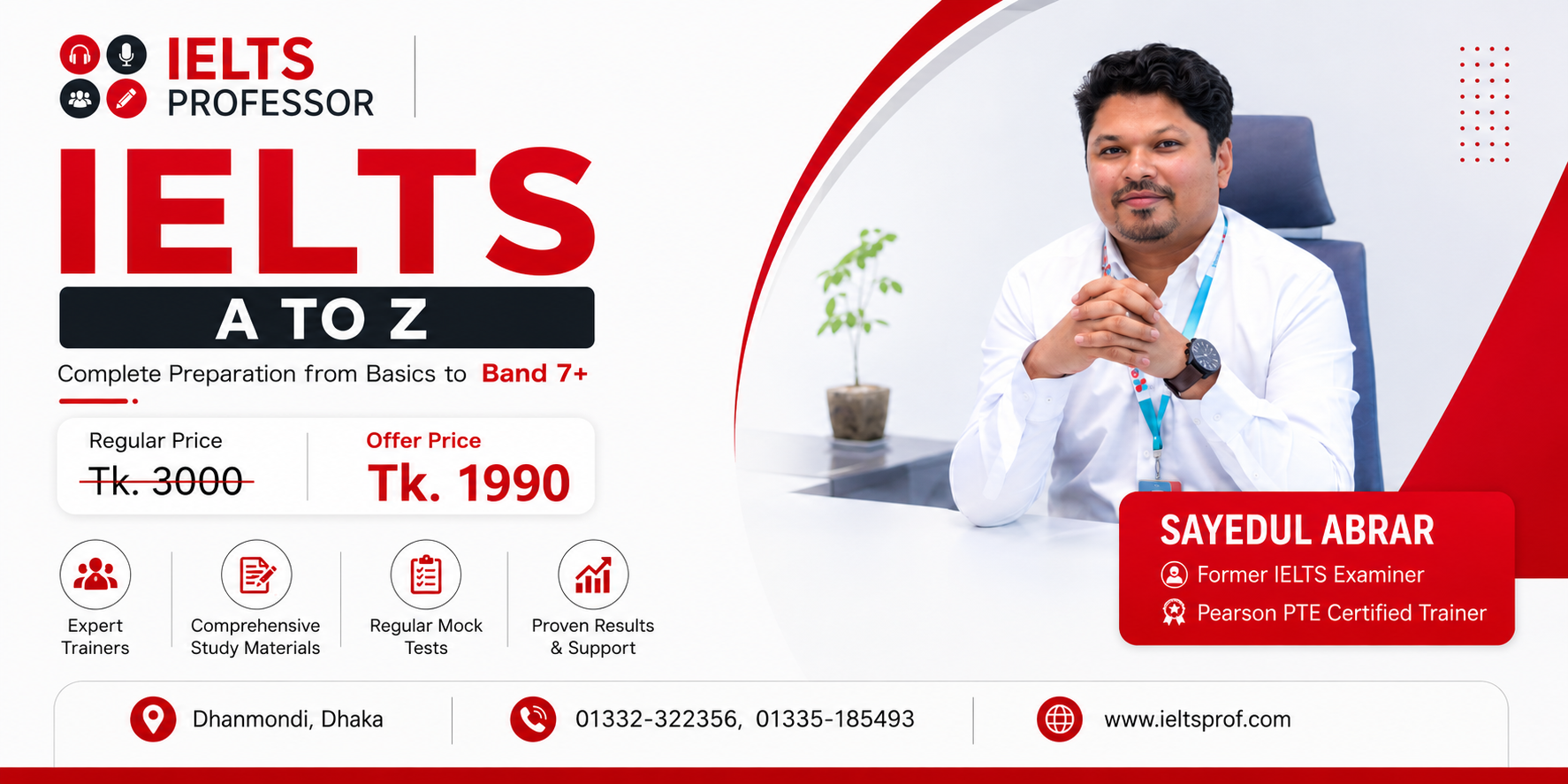
IELTS A to Z
৳ 1990.00
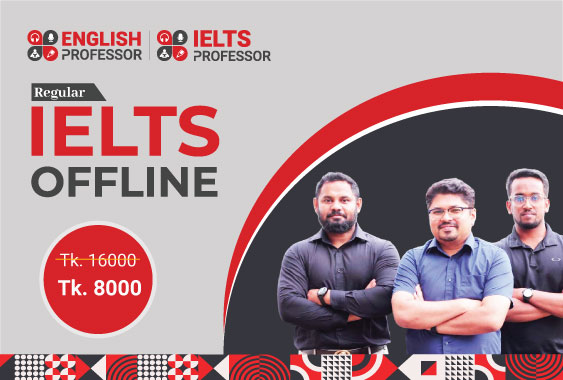
7+ IELTS Offline Regular
৳ 8000.00
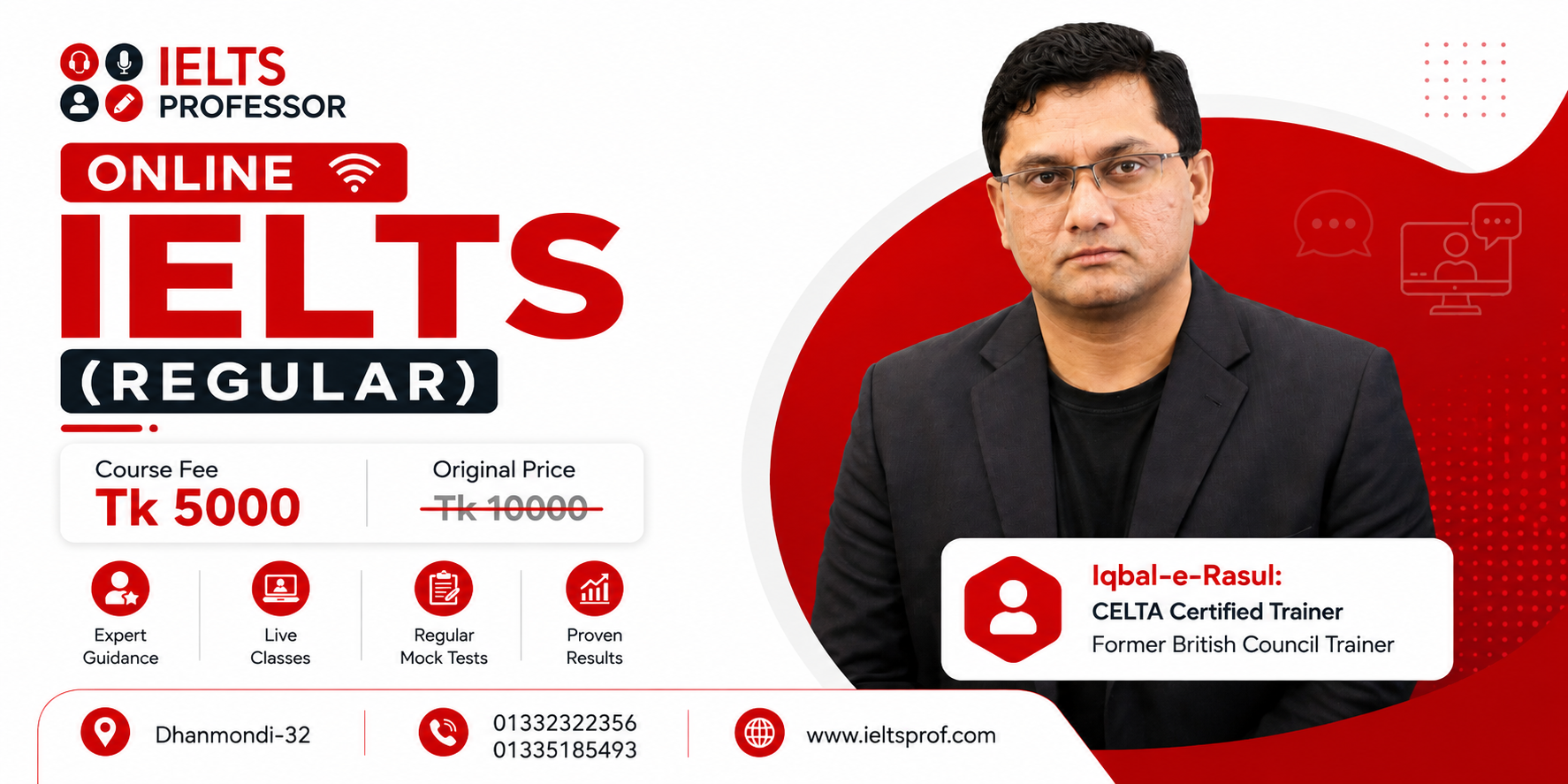
Online IELTS (Regular)
৳ 5000.00
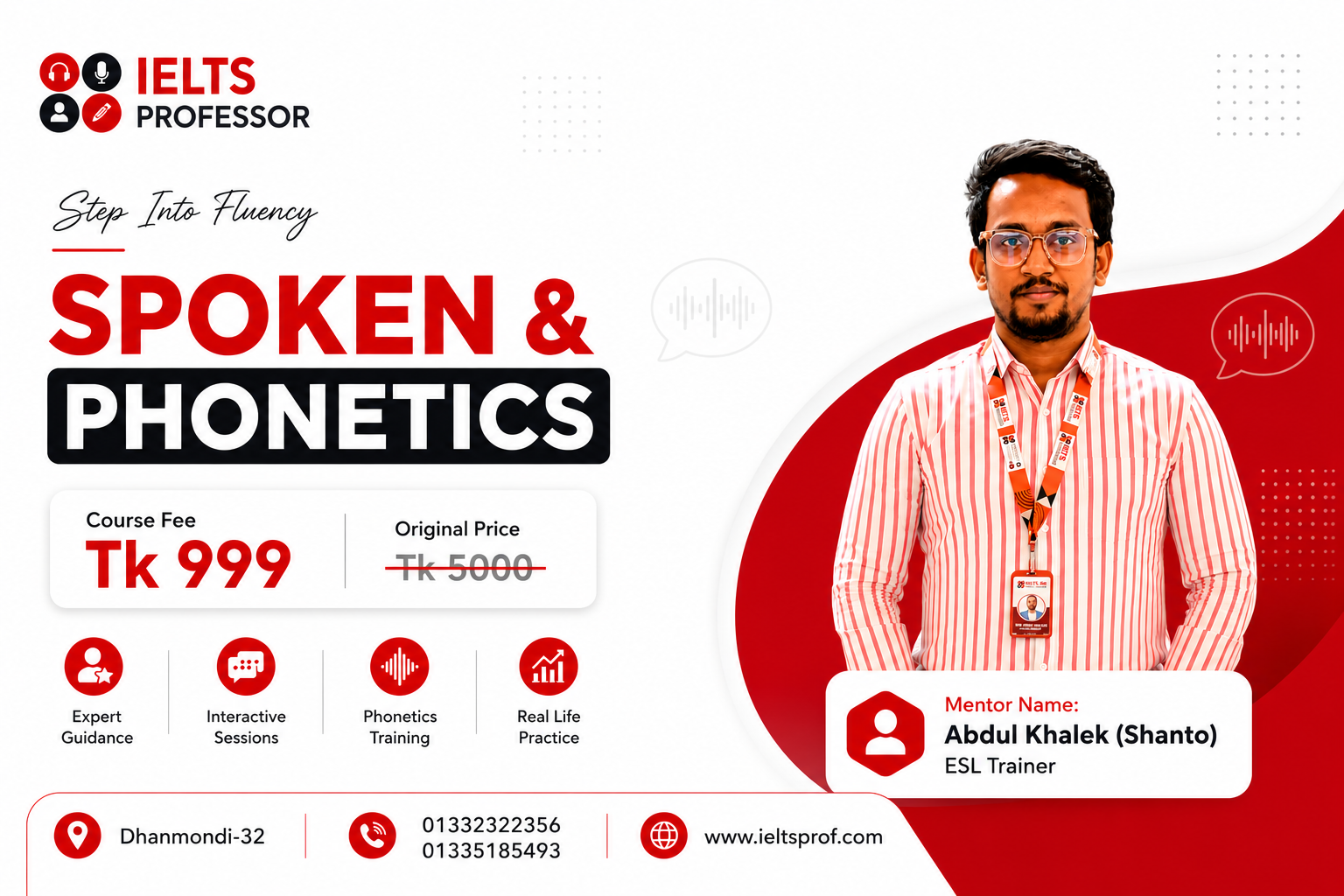
Spoken English
৳ 3500.00
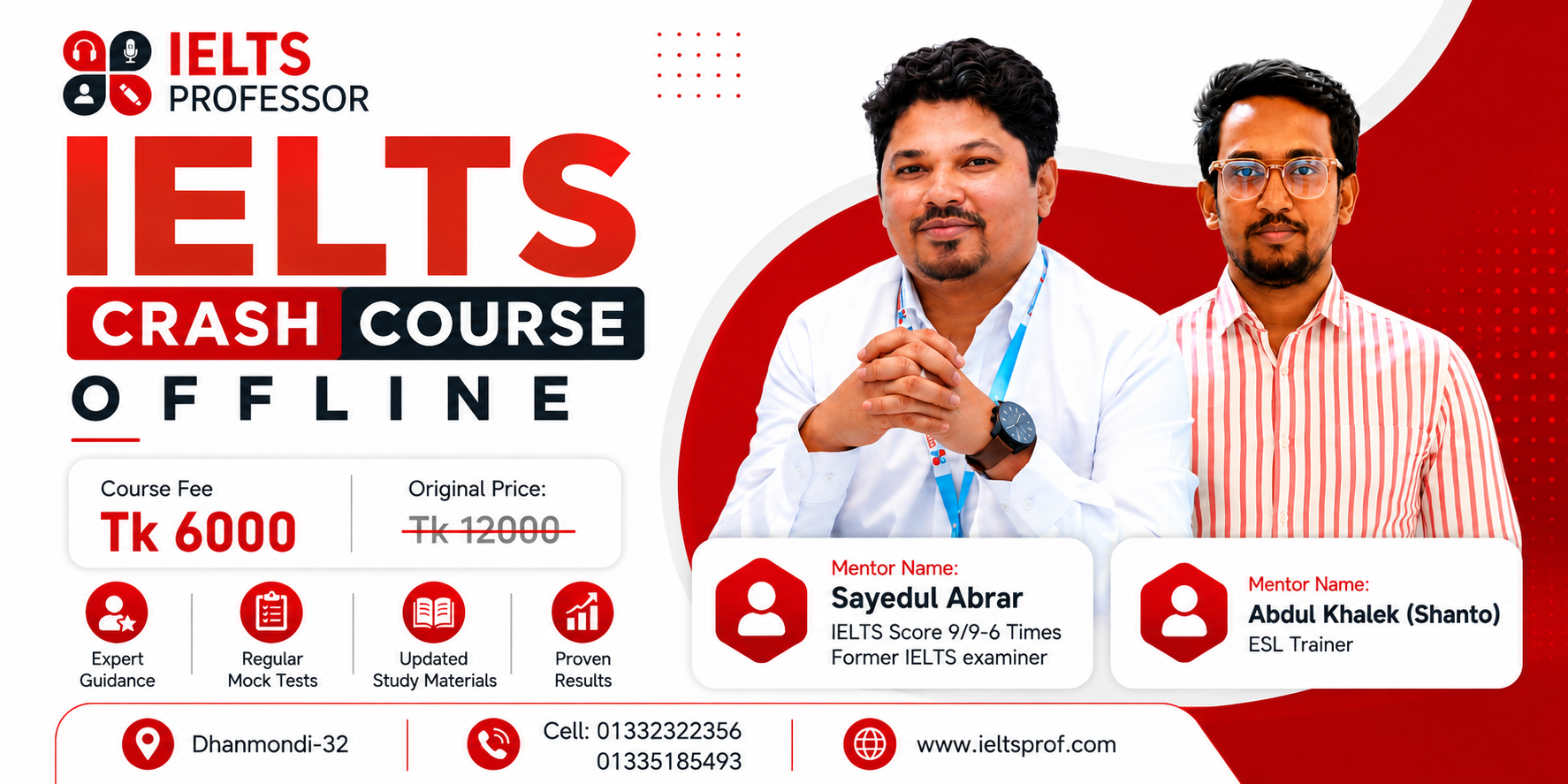
IELTS Regular Executive
৳ 8000.00
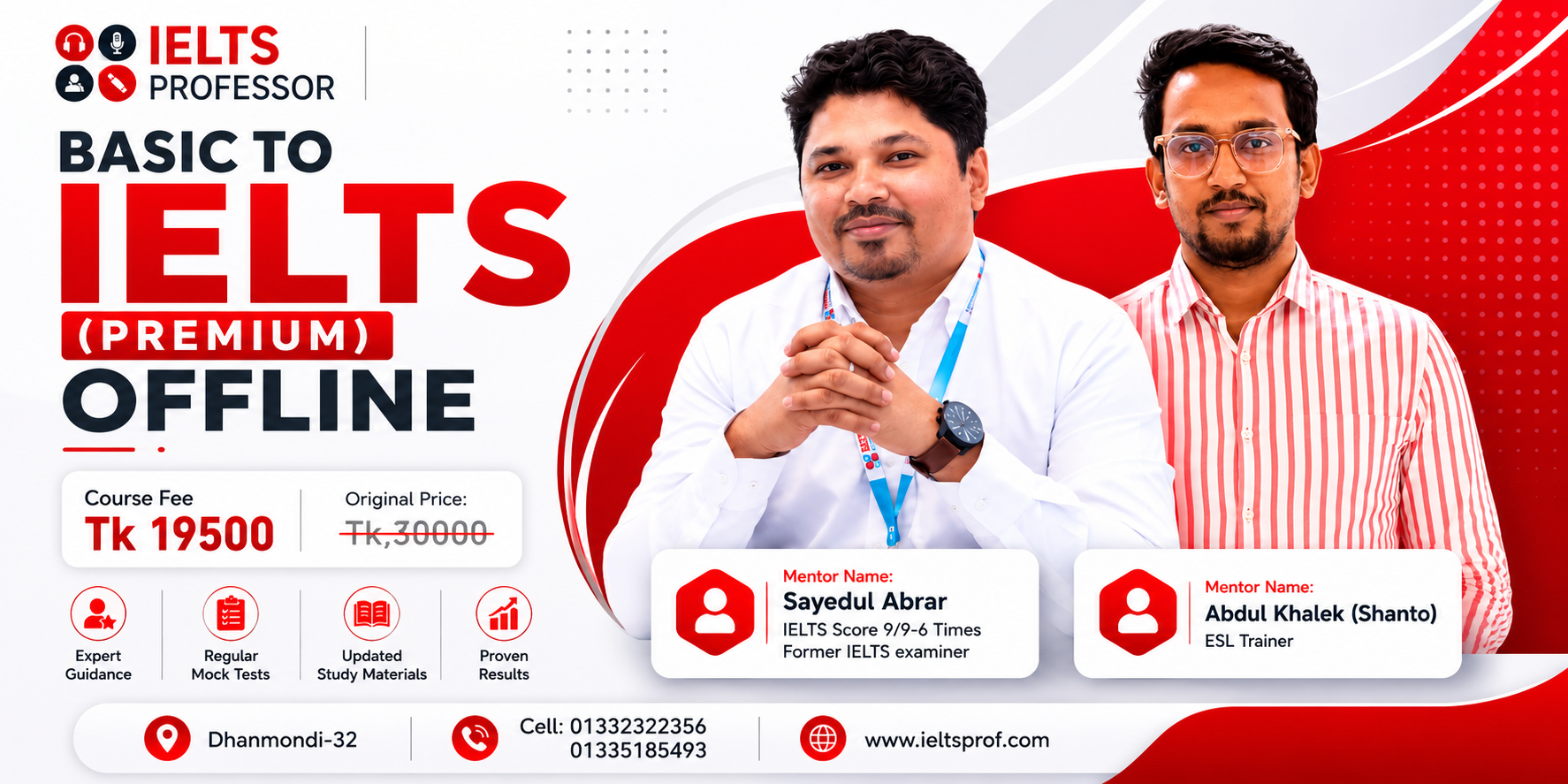
Basic to IELTS
৳ 19500.00
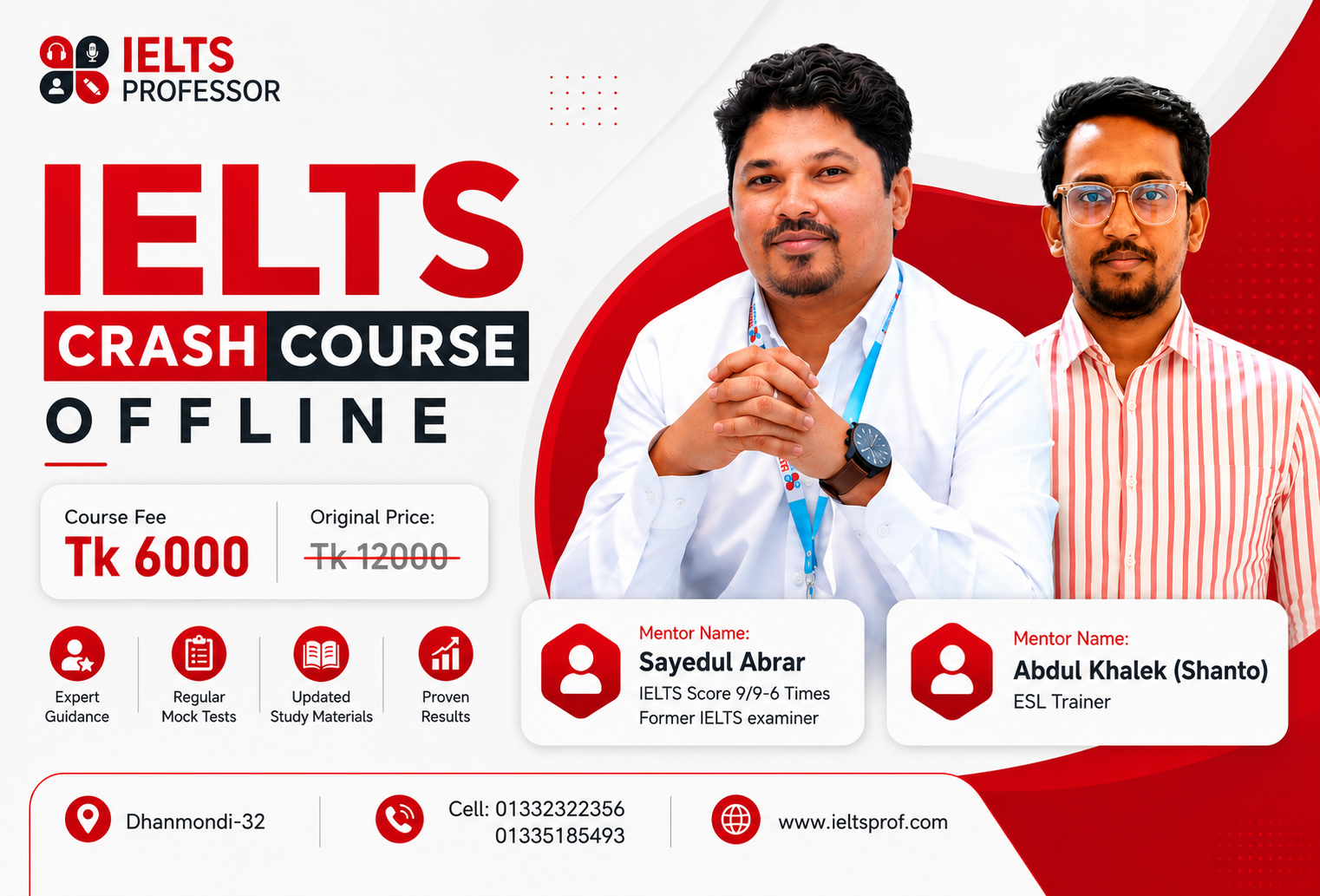
IELTS Crash Course
৳ 6000.00
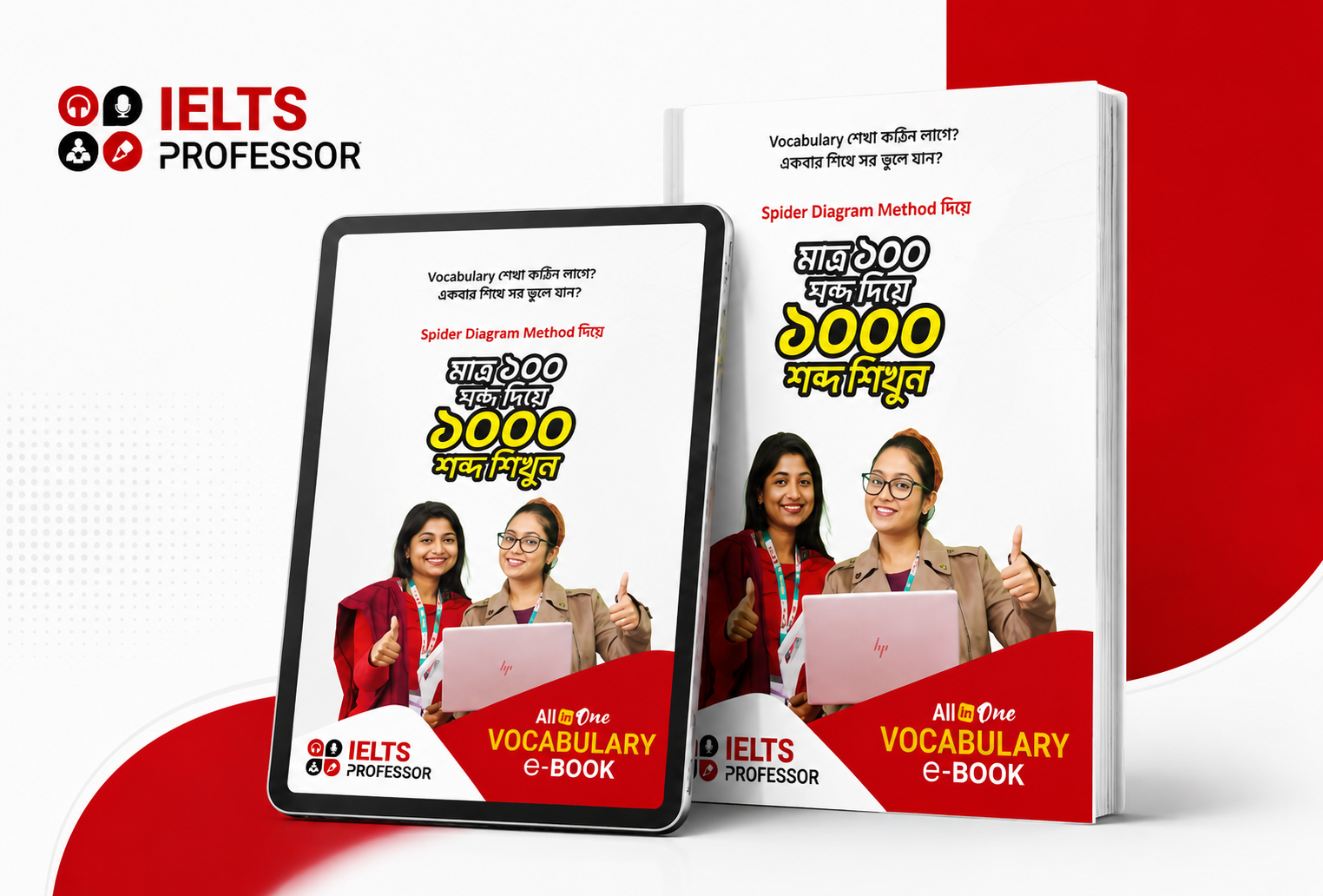
All in One Vocabulary
৳ 249.00

Premium 7+ IELTS Offline
৳ 14000.00